
Free guides
The Honest Application
Thirty short guides covering a full graduate application, in the order the decisions arrive. Read them in sequence and you'll know more about the process than most applicants ever do.
Act 1 · The reality check
Guide 1
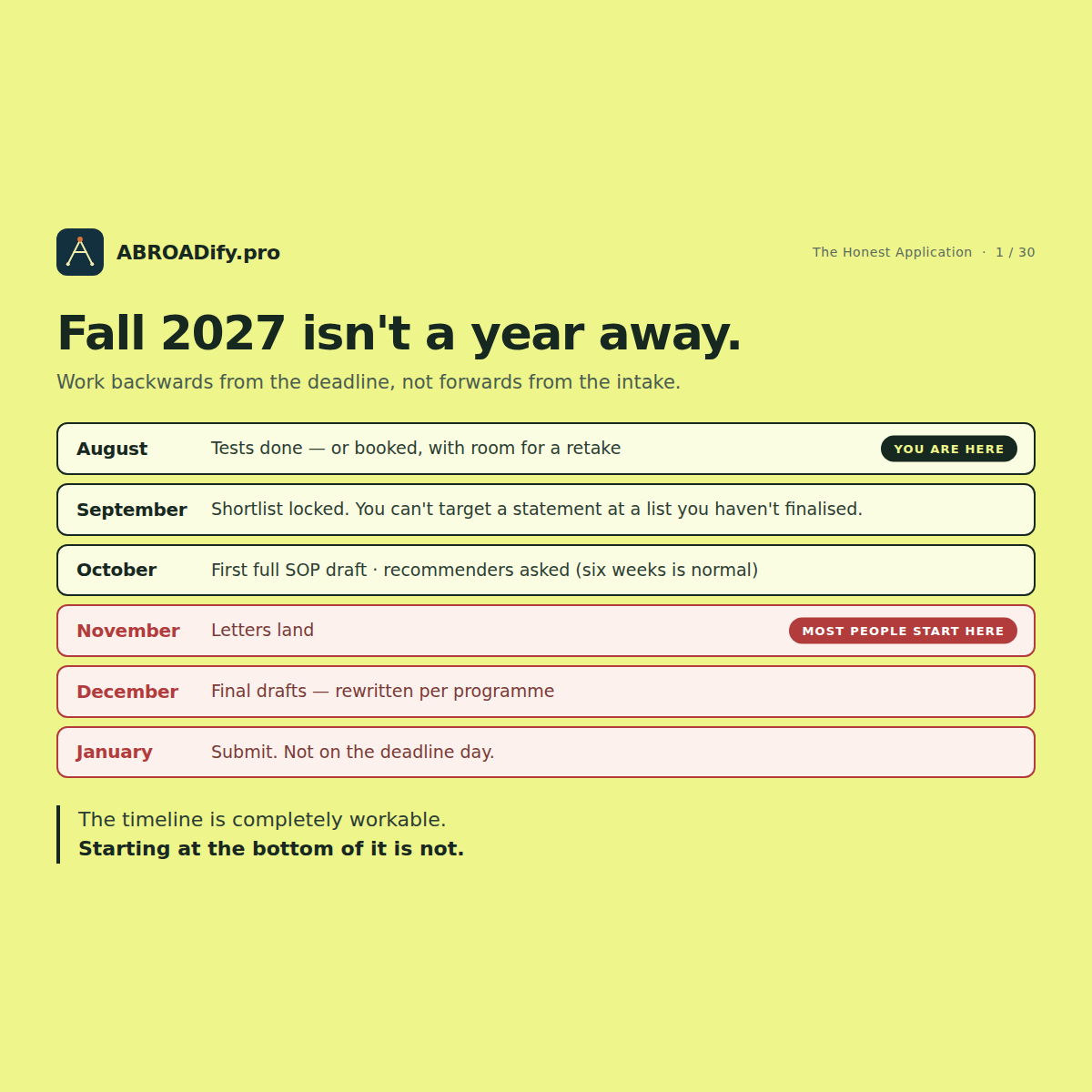
Where the year actually goes
If you're applying for Fall 2027, your deadline is roughly four months away.
Guide 2
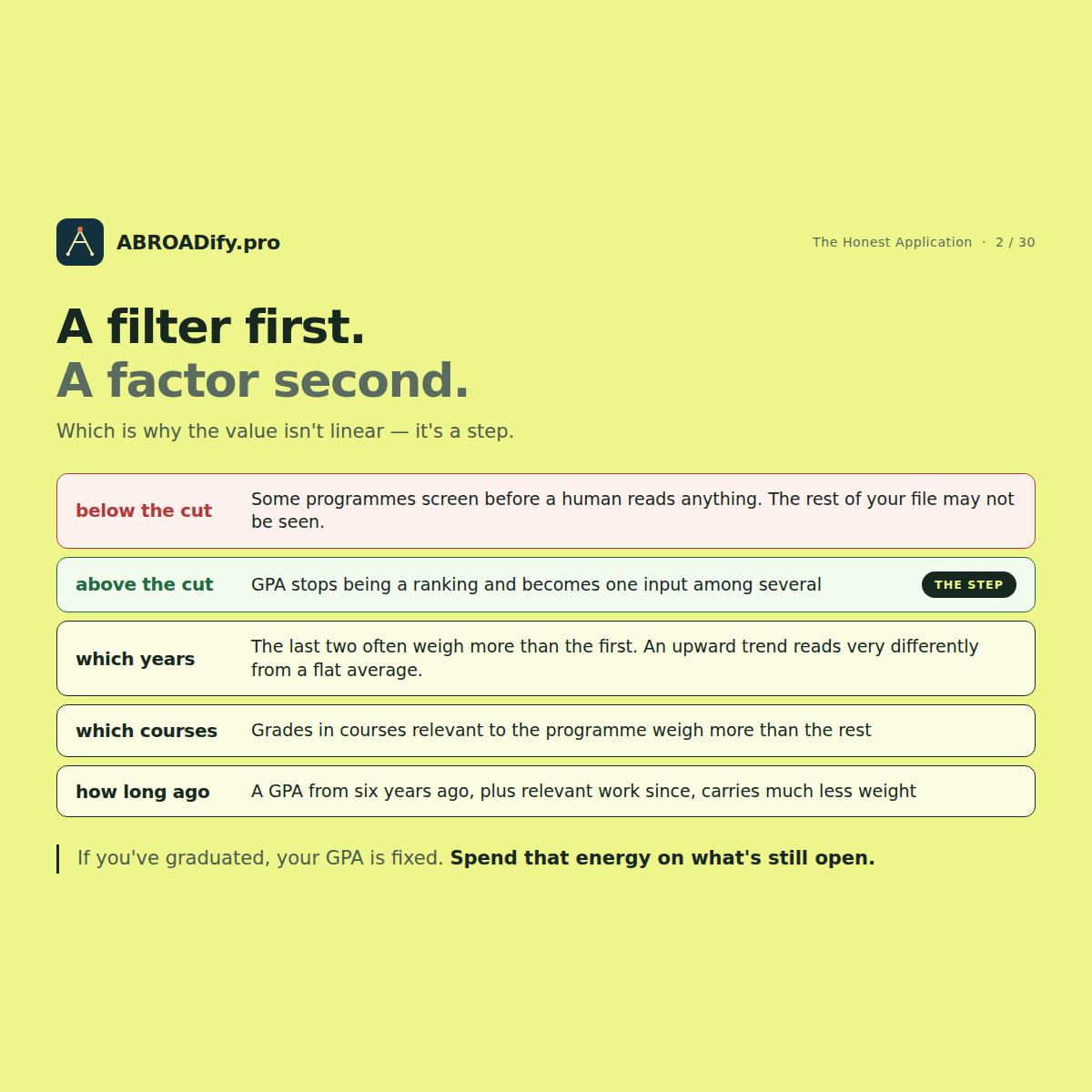
Your GPA is not the whole story, but it isn't nothing
Two things get said about GPA, and both are half-true.
Guide 3
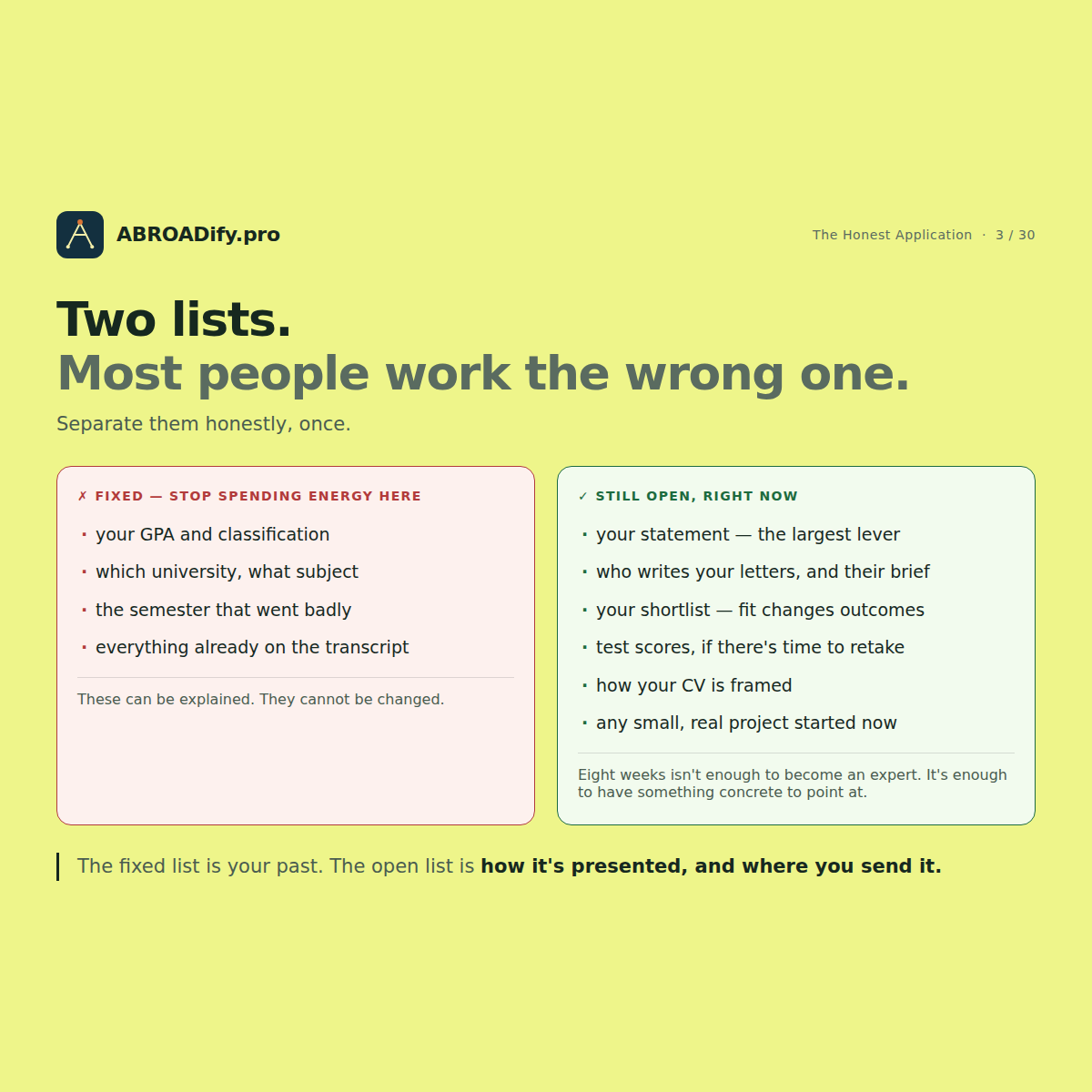
The parts of your profile you can still change
Most application anxiety is spent on things that are already settled. It's worth separating the two lists, honestly, once.
Guide 4
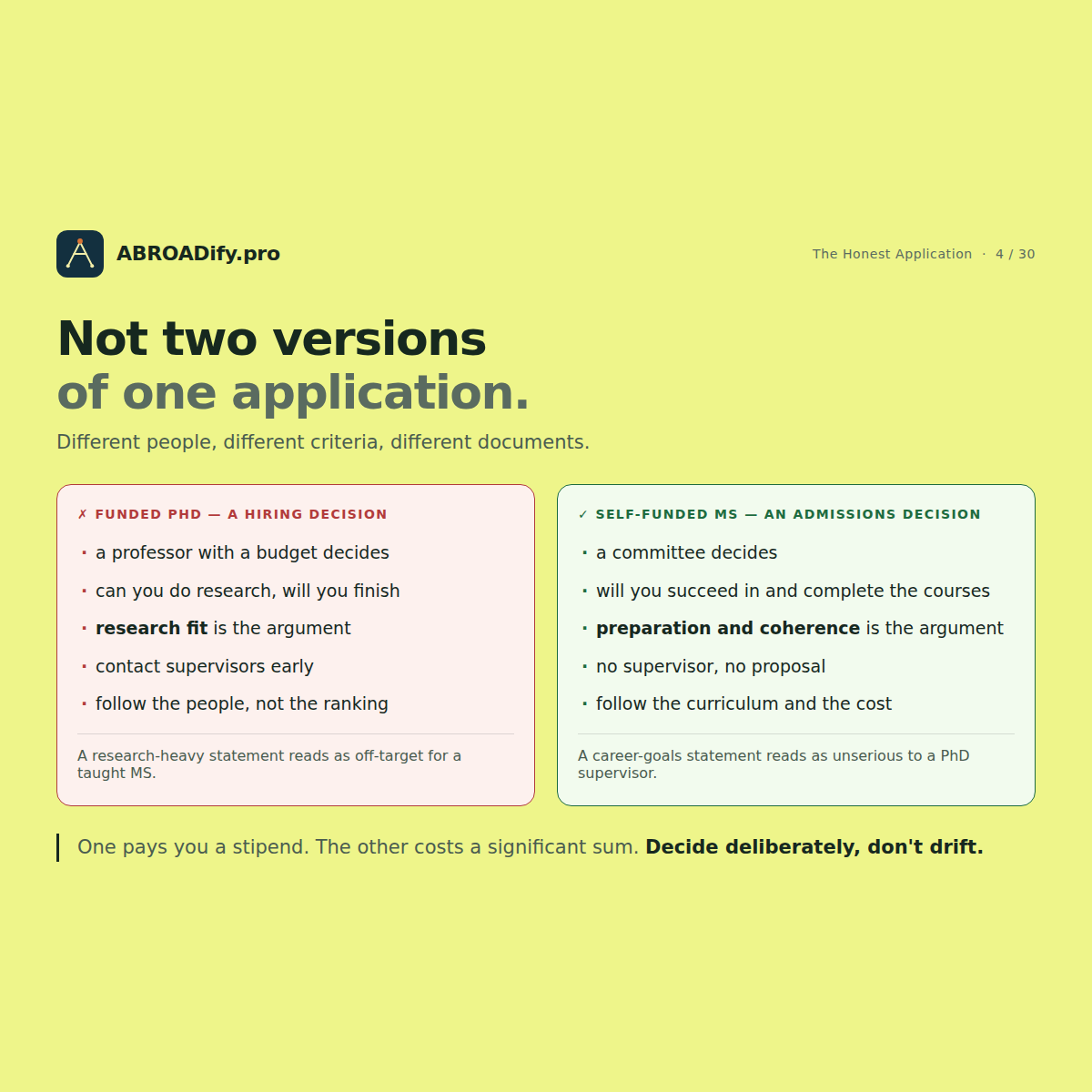
Funded PhD or self-funded MS?
These are not two versions of the same application.
Guide 5
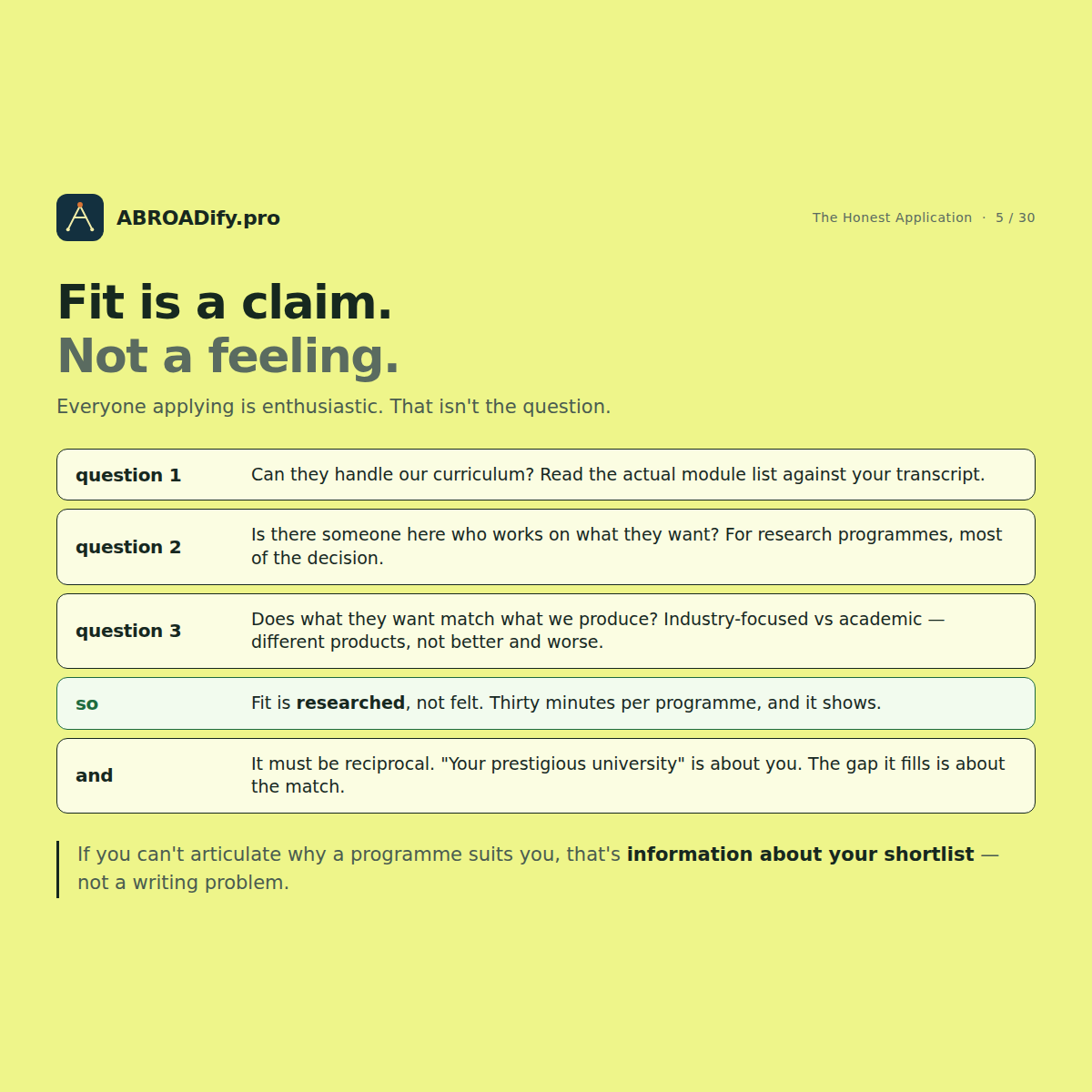
What "good fit" means to a committee
Every programme says it wants students who are a "good fit".
Guide 6
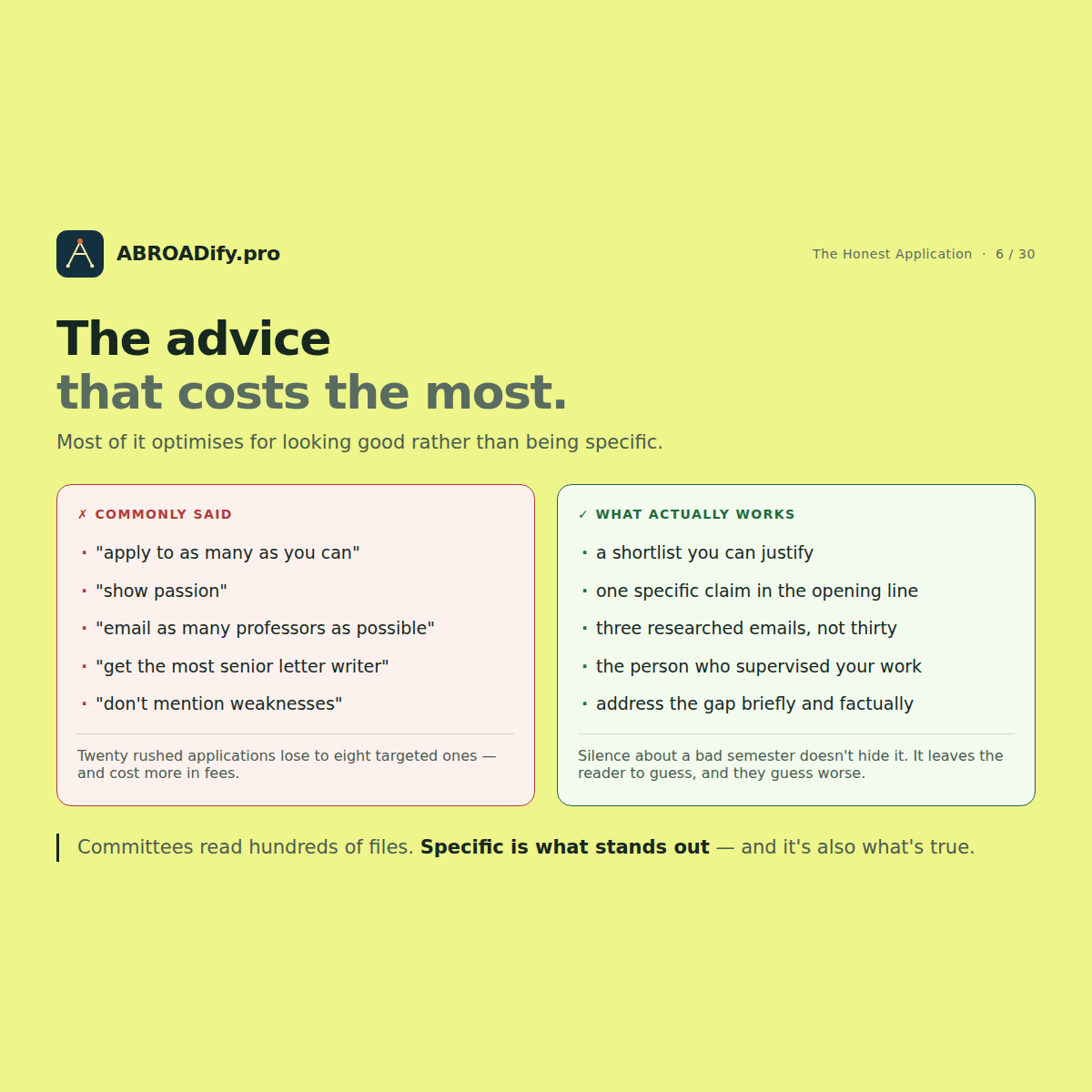
The advice that costs applicants the most
Some of the most repeated advice in this space is wrong, and it's expensive. Here are the pieces I see cost people the most.
Act 2 · Building the shortlist
Guide 7
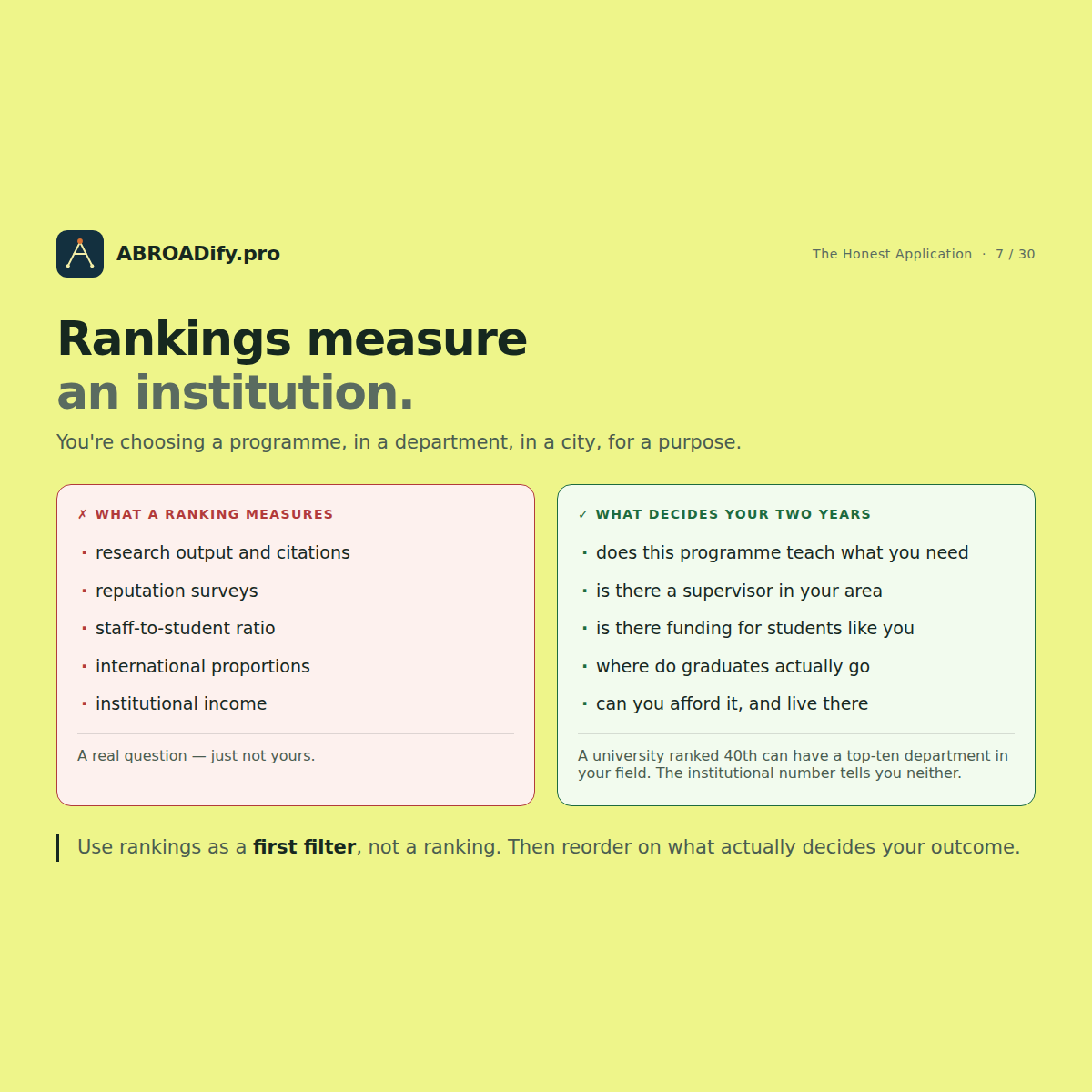
Rankings answer a question you're not asking
Rankings are the first thing most applicants use to build a shortlist, and they measure almost none of what determines your outcome.
Guide 8
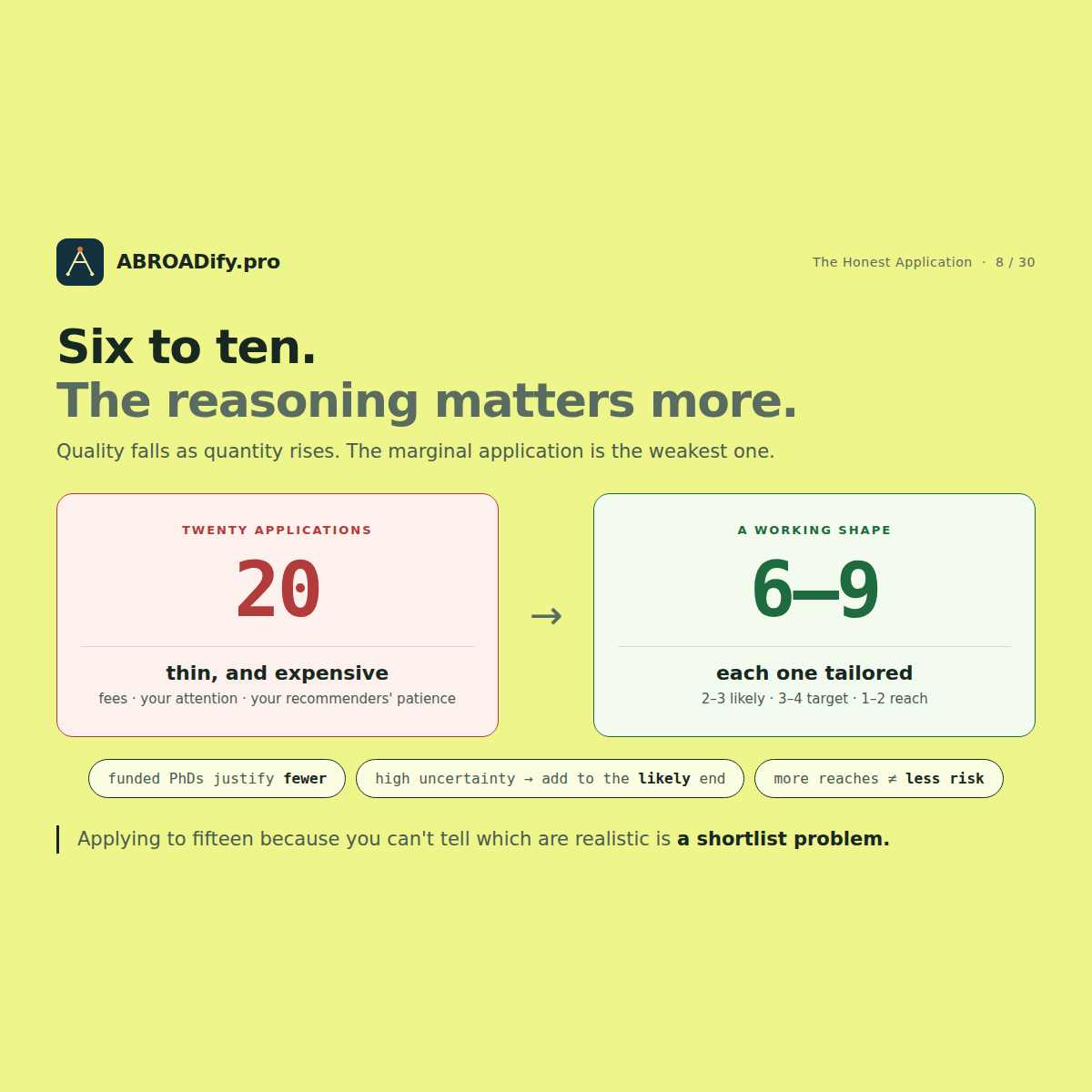
How many programmes should you apply to?
The honest answer is six to ten for most people, and the reasoning matters more than the number.
Guide 9
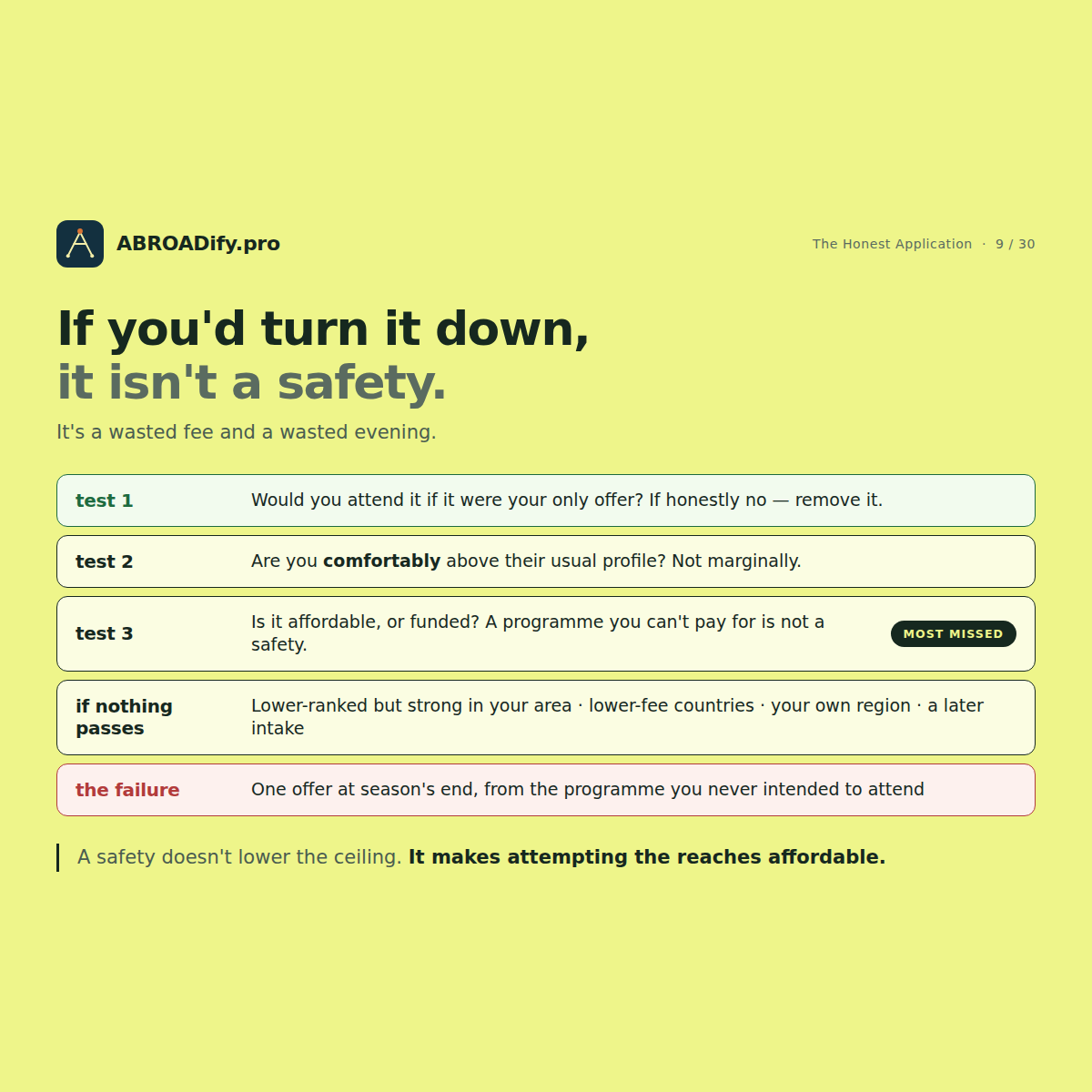
The safety school you'd actually attend
A safety isn't a programme you're likely to get into. It's a programme you're likely to get into and would genuinely go to.
Guide 11
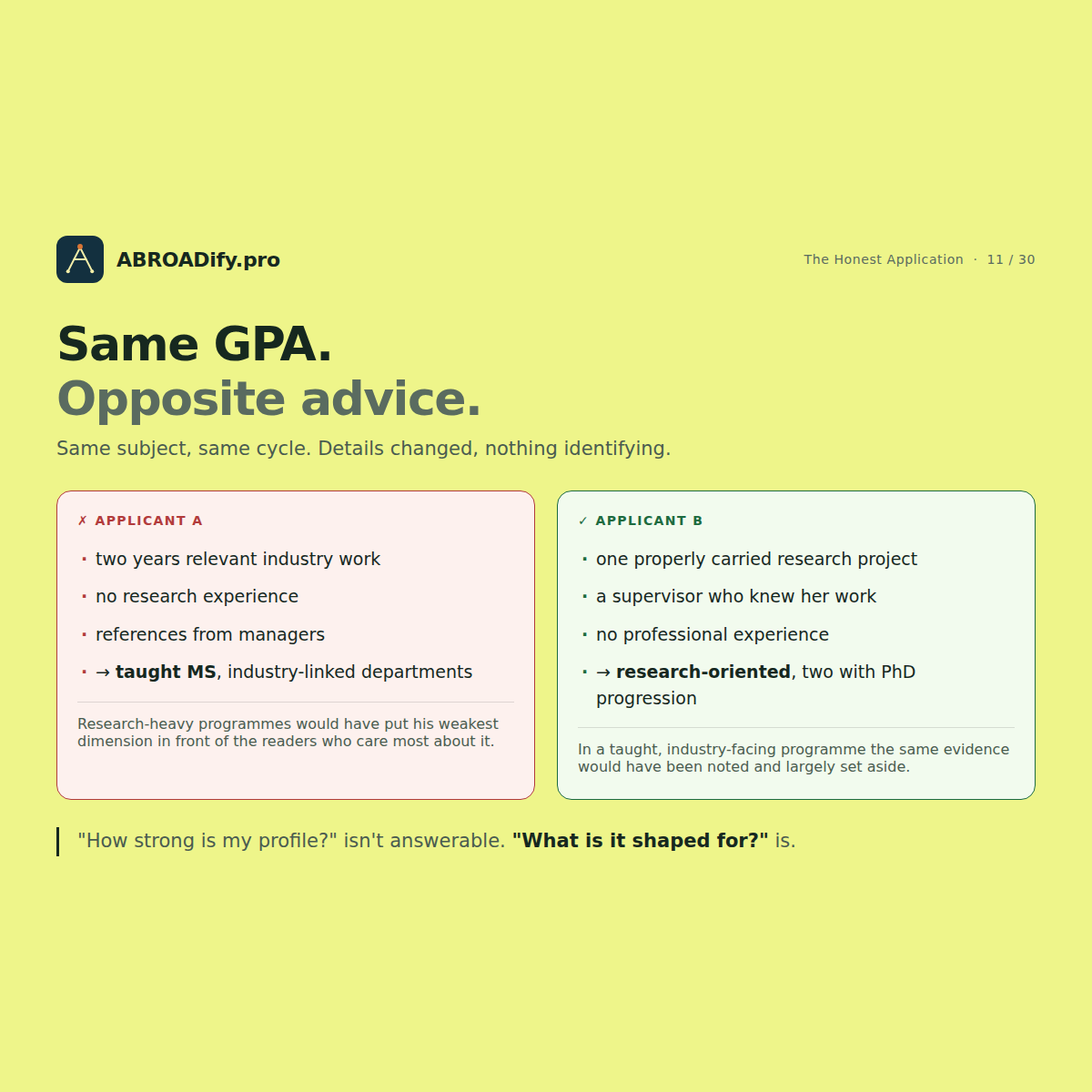
Two applicants, same GPA, different advice
Two applicants came to me with the same GPA, in the same subject, applying in the same cycle. They got close to opposite advice.
Guide 12
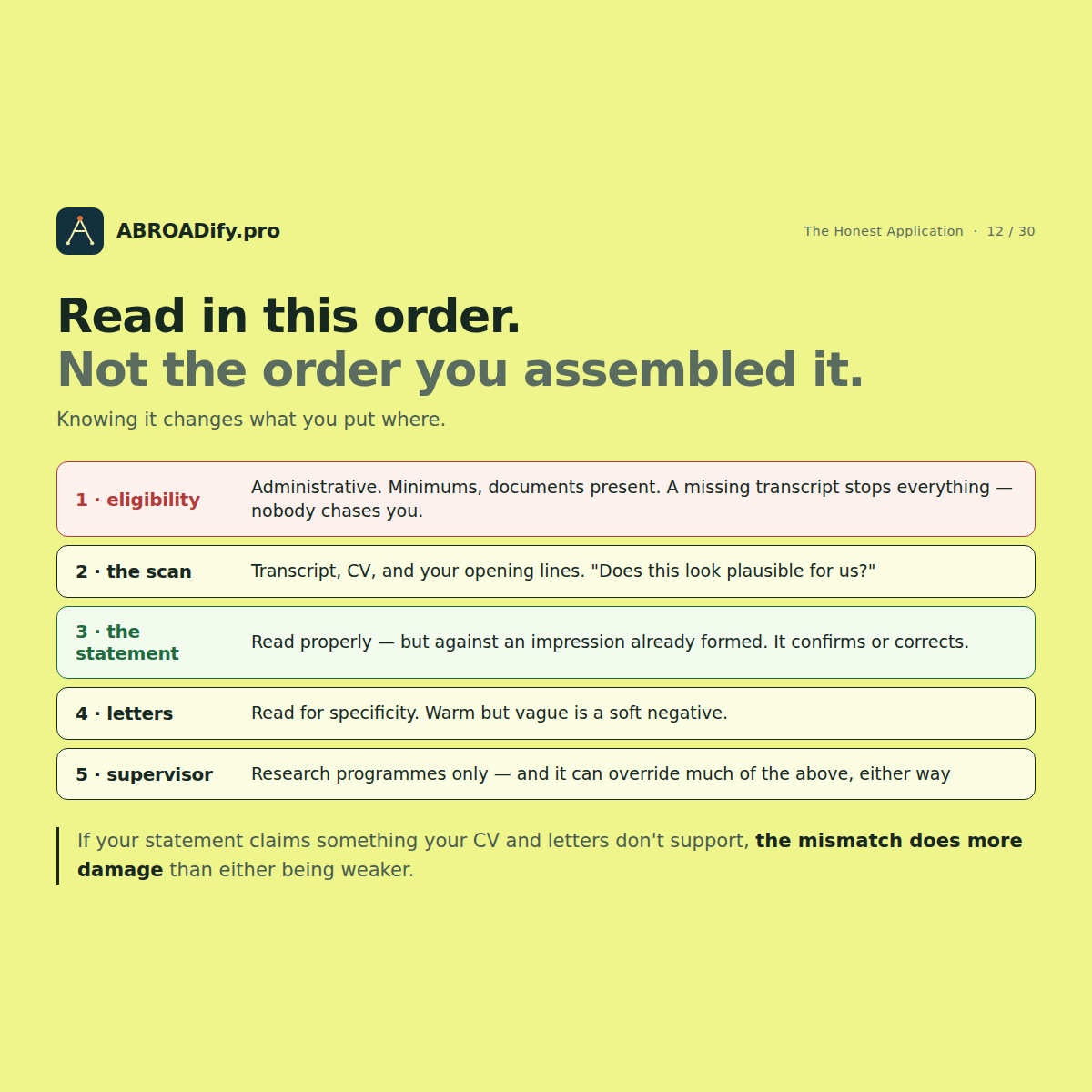
What a committee reads first
Files aren't read the way they're assembled. Knowing the order changes what you put where.
Act 3 · The statement of purpose
Guide 13
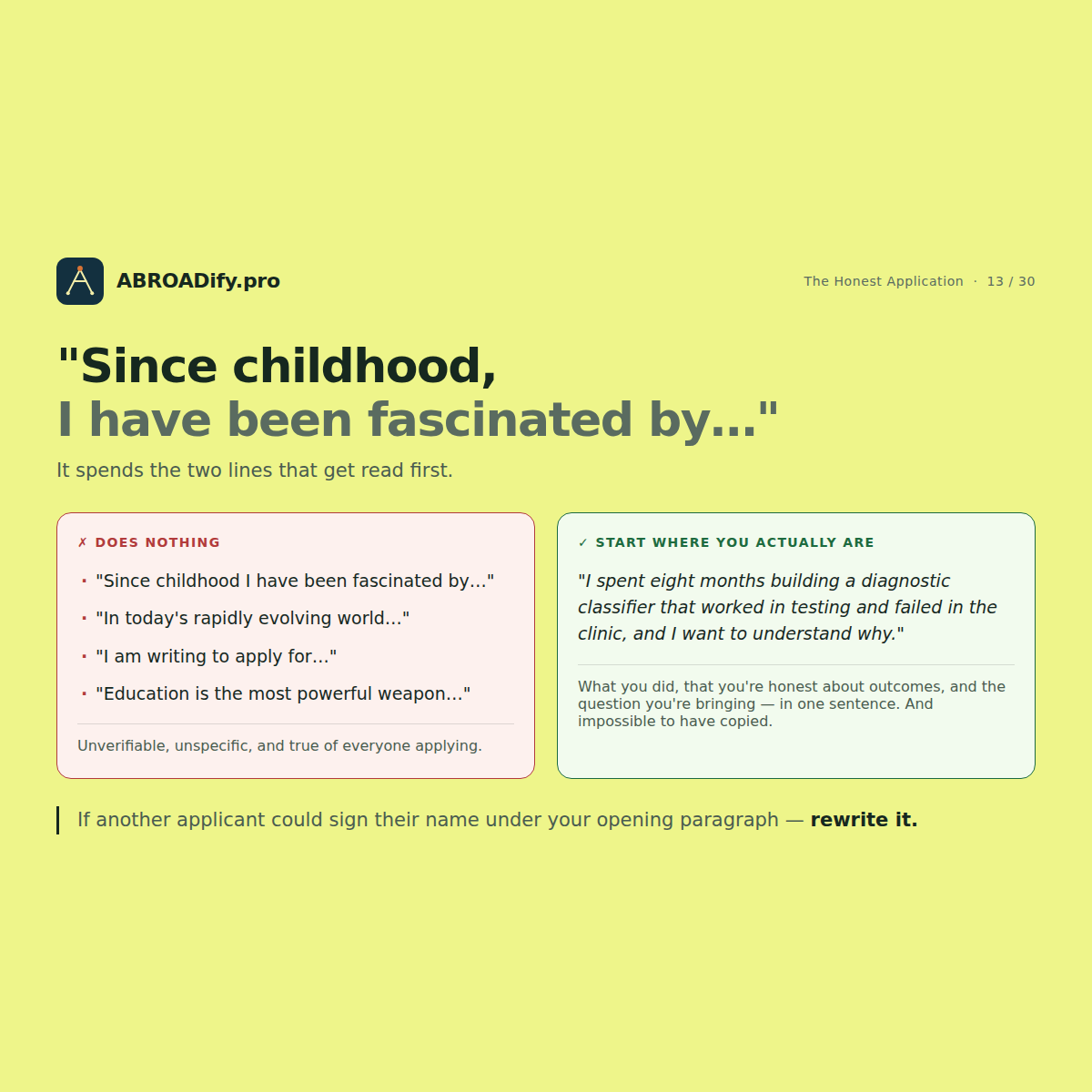
Your SOP opening is doing nothing
"Since childhood, I have been fascinated by technology."
Guide 14
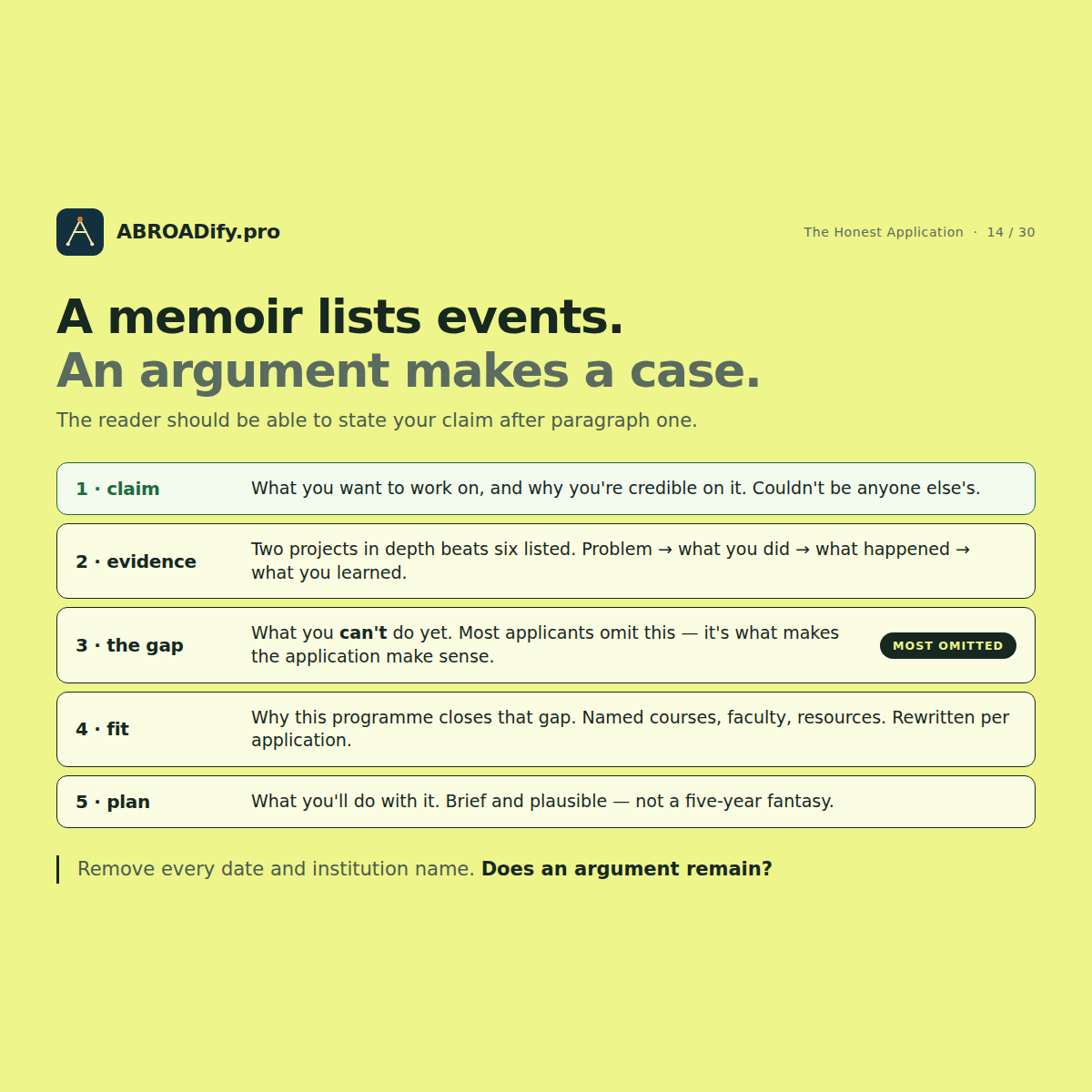
An SOP is an argument, not a memoir
Most statements are structured as a chronology.
Guide 15
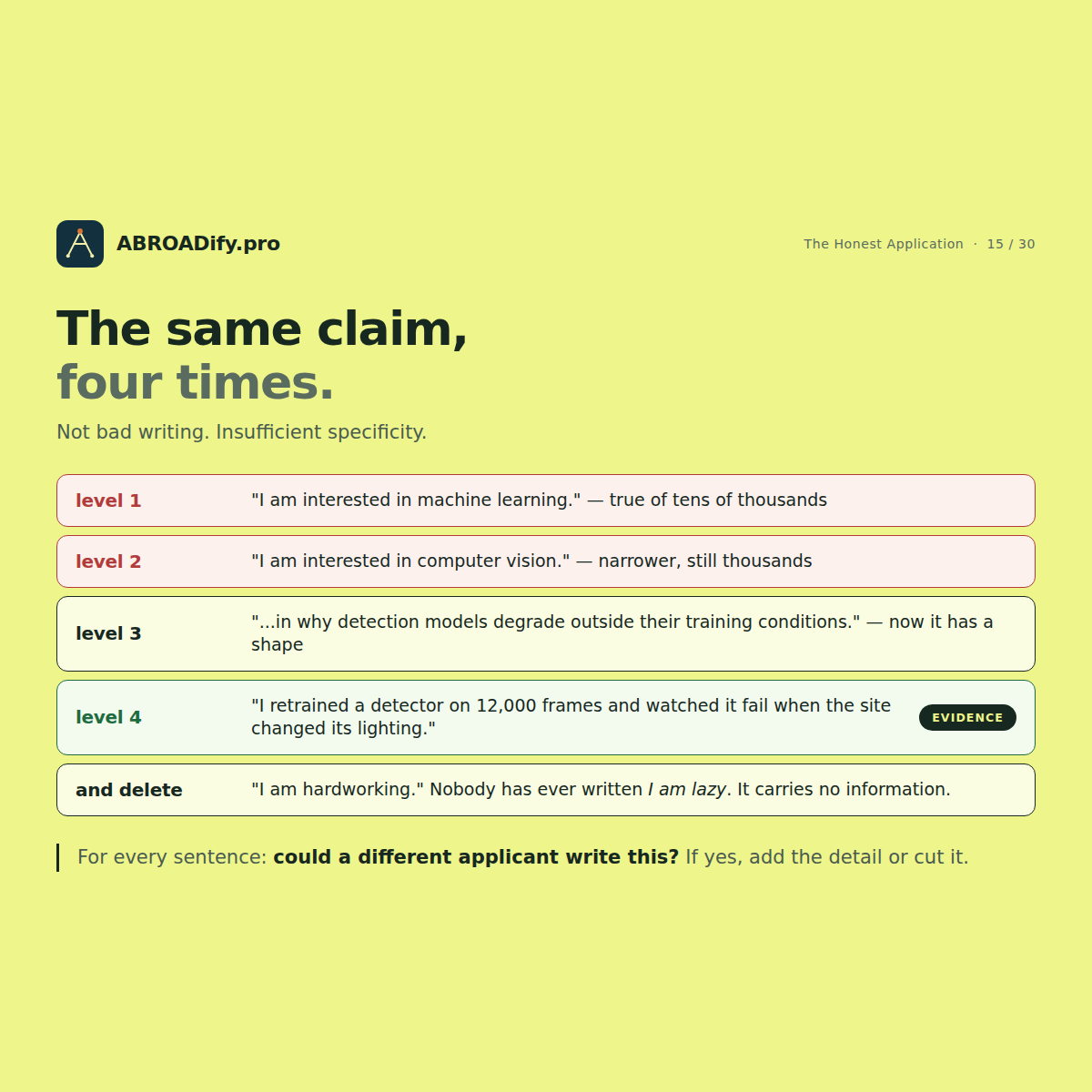
Specificity is the whole game
Almost every weak statement fails the same way. Not bad writing — insufficient specificity.
Guide 16
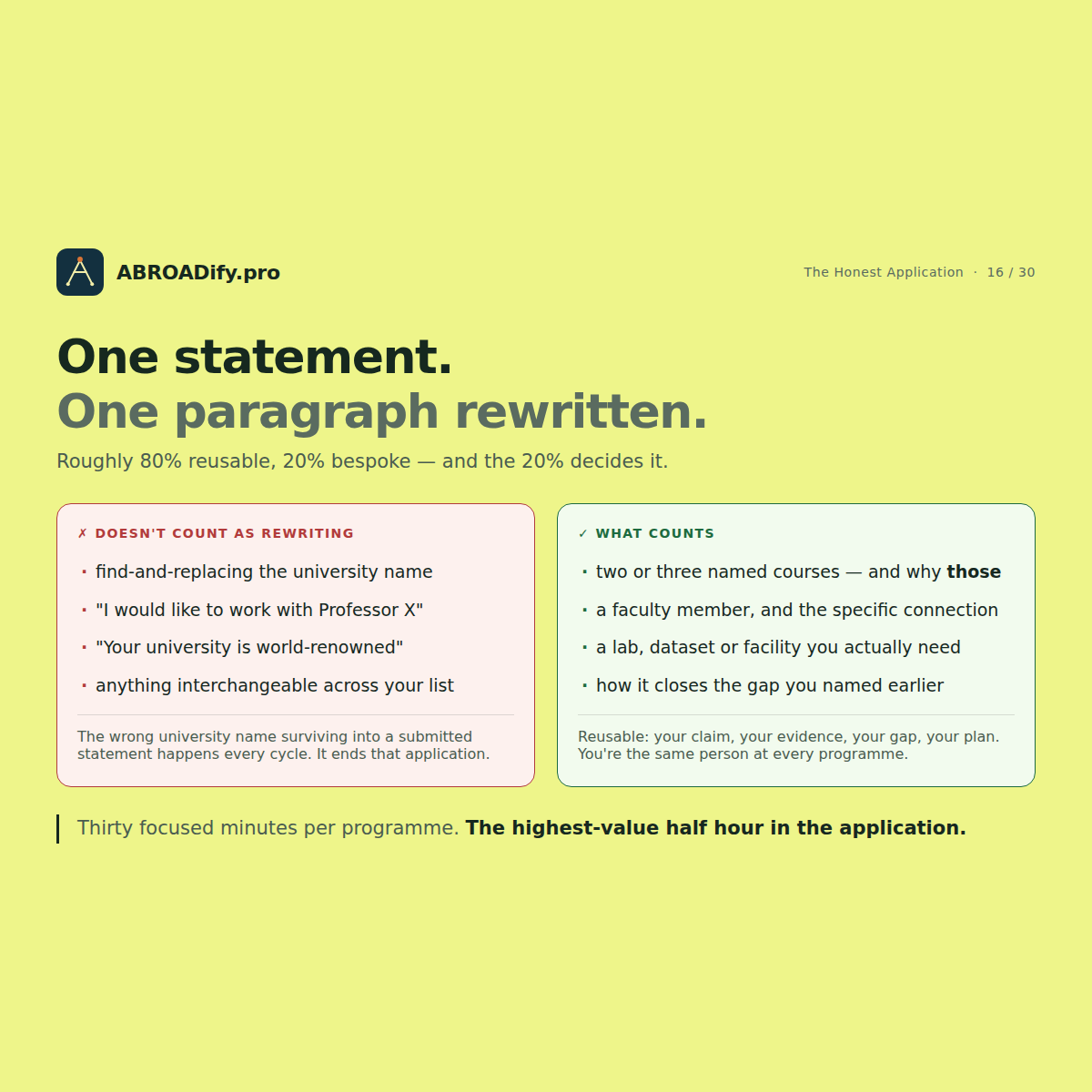
The paragraph that has to be rewritten per programme
You do not write eight statements.
Guide 17
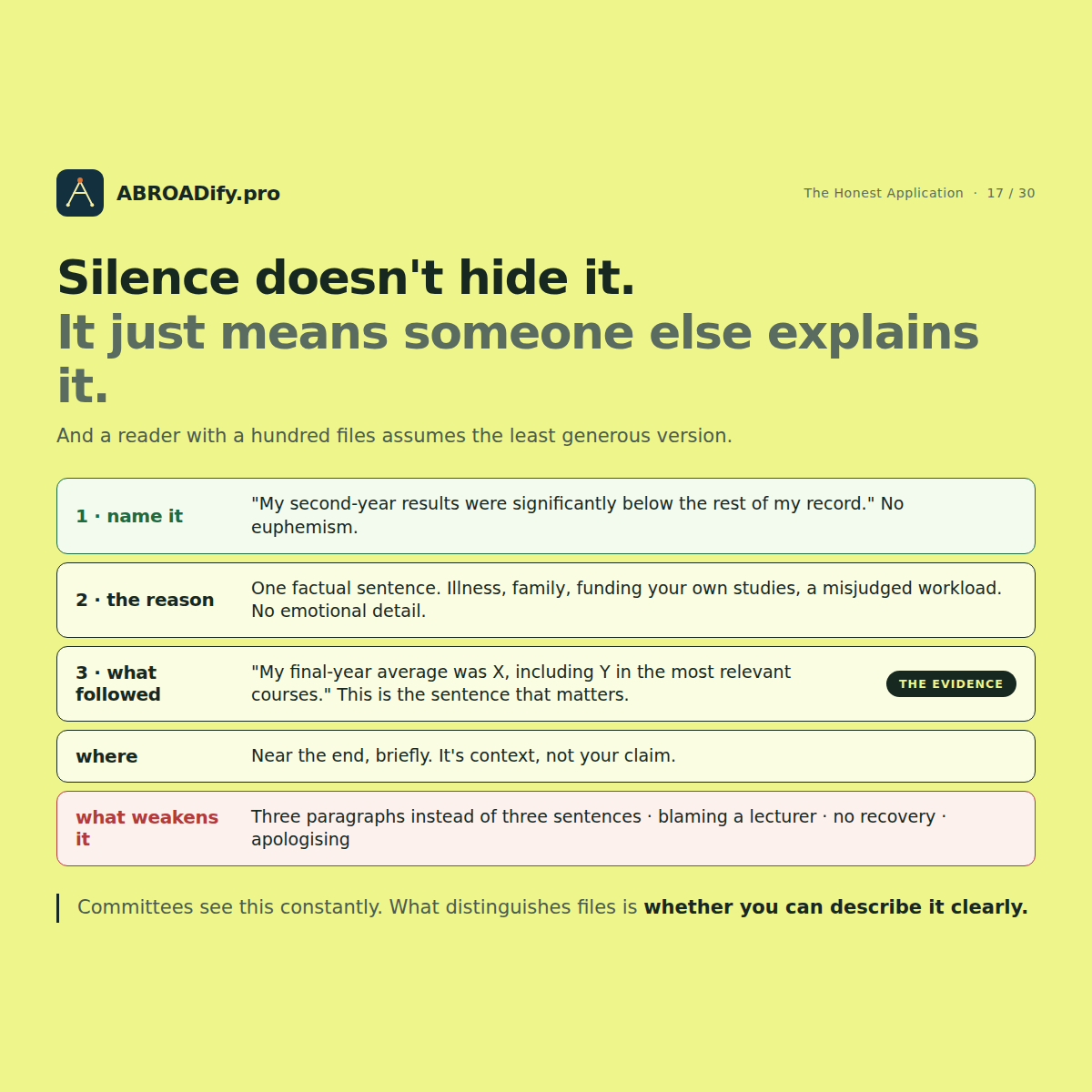
Explaining a weak semester without excusing it
A bad semester, a gap year, a failed module, a change of course. The instinct is to say nothing and hope it isn't noticed.
Guide 18
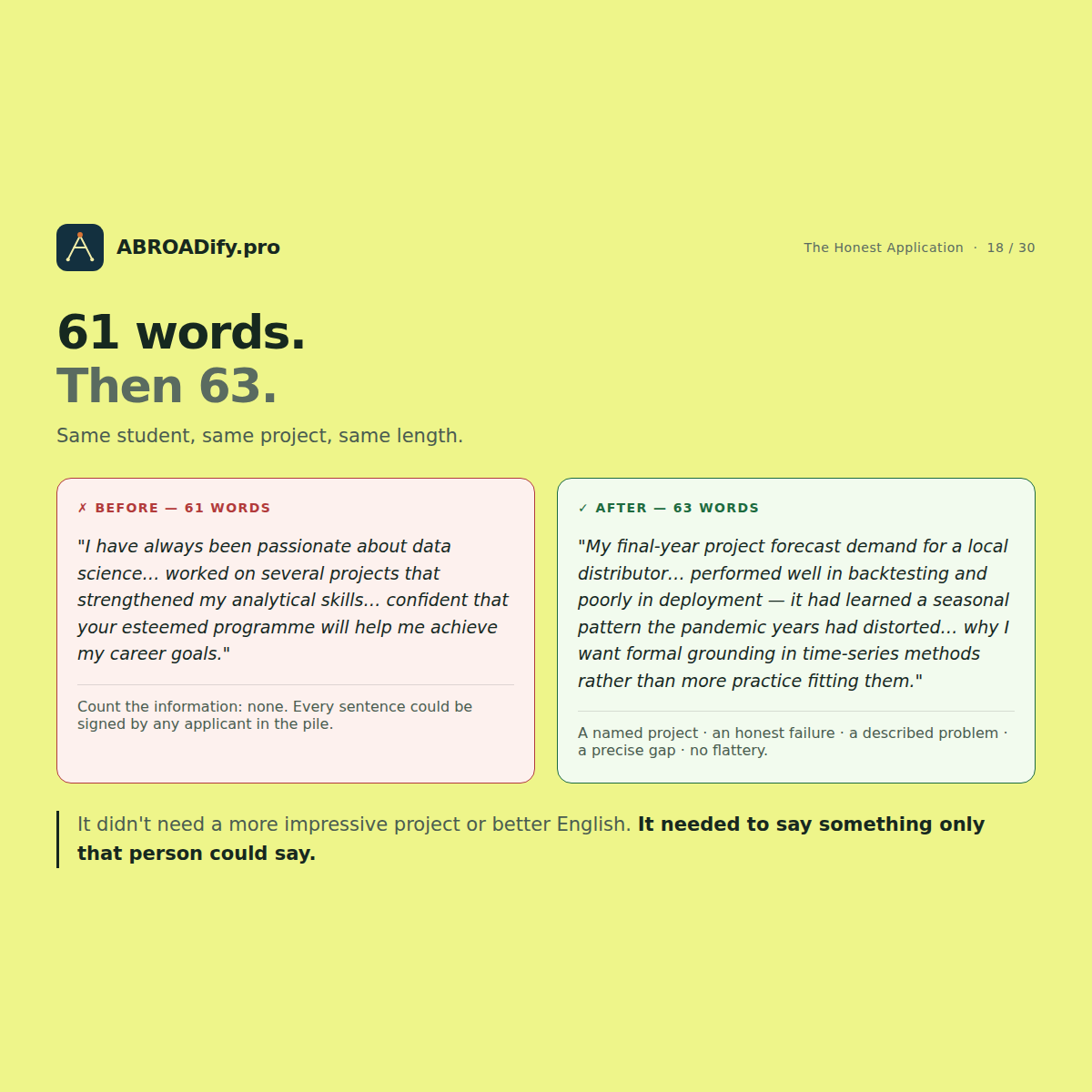
Before and after, one real paragraph
A real rewrite, with the reasoning shown. Details changed; not identifiable.
Act 4 · The rest of the file
Guide 19
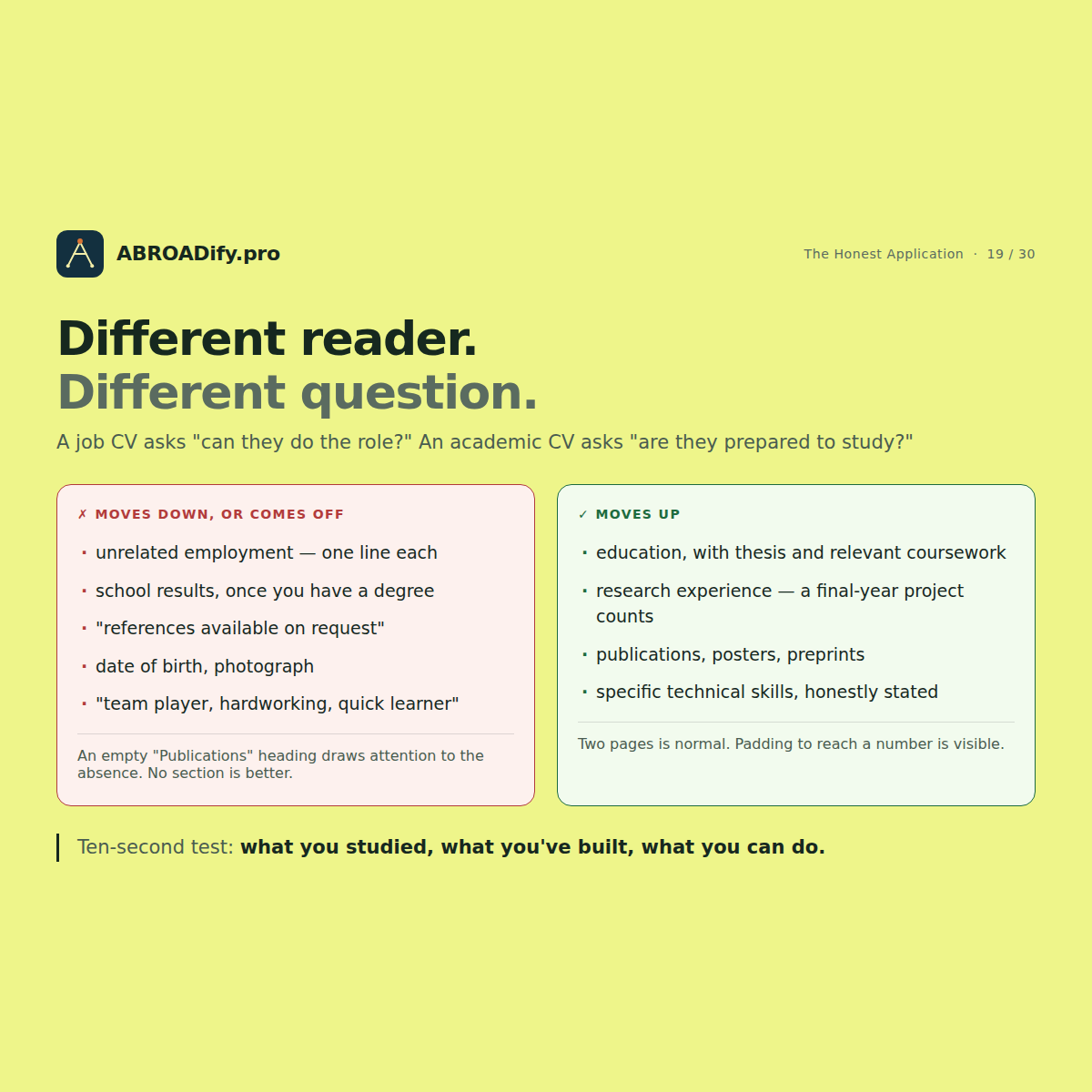
An academic CV is not a job CV
The CV that got you an internship is the wrong document for a graduate application. Different reader, different question, different order.
Guide 20
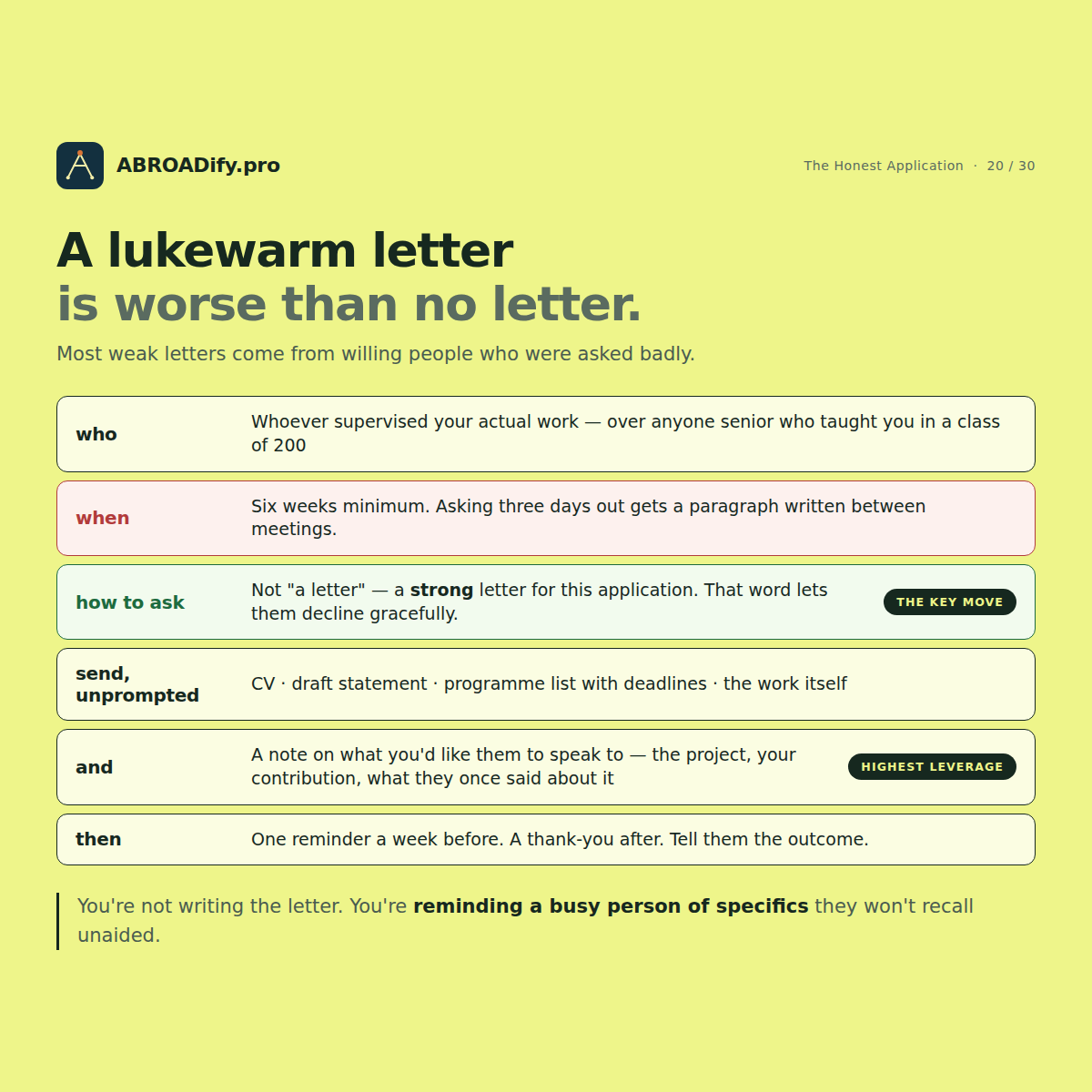
Asking for a recommendation letter properly
A lukewarm letter is worse than no letter. It doesn't sit neutrally — it signals that the person who knew your work best had little to say.
Guide 21
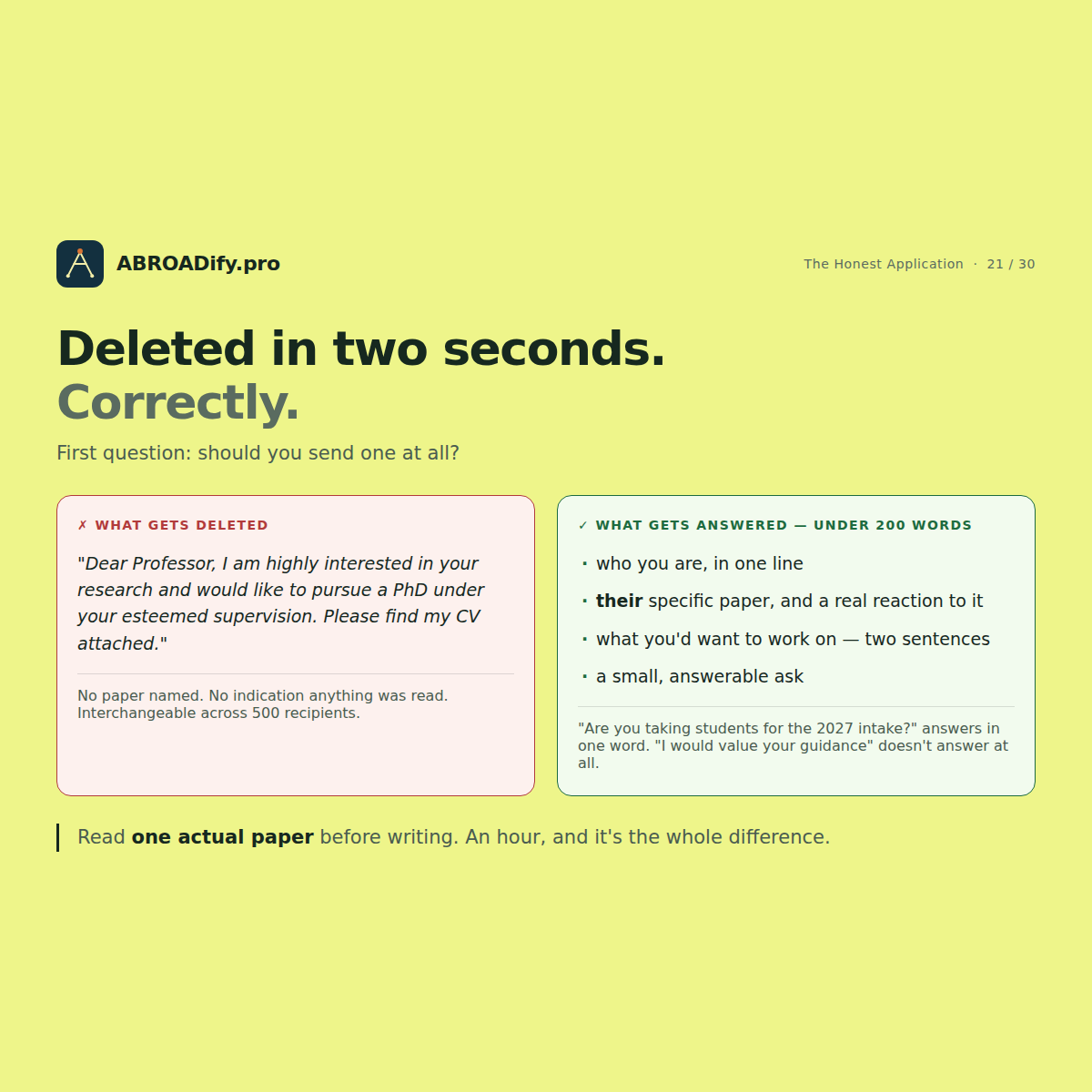
The professor email that gets answered
Most emails to prospective supervisors are never answered.
Guide 22
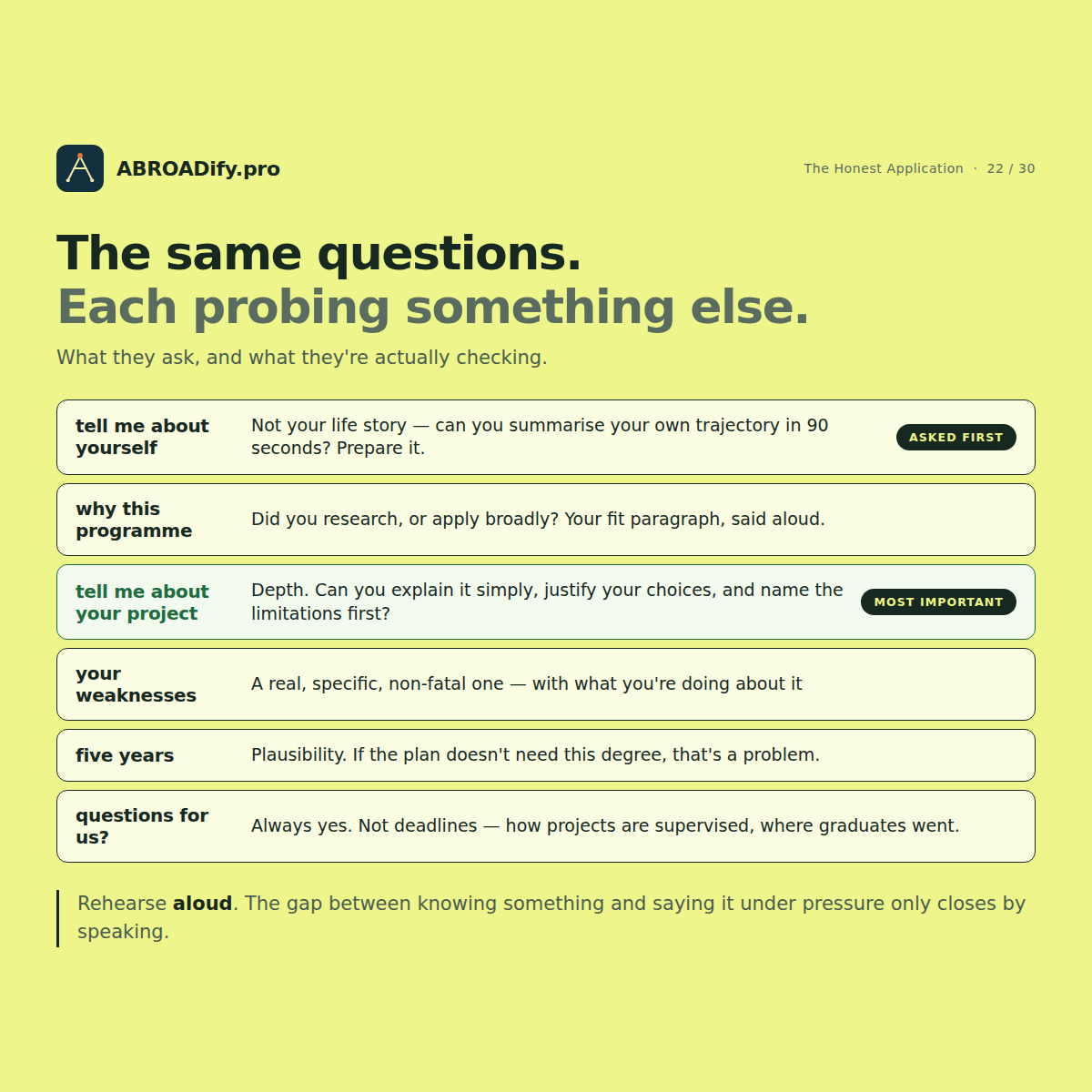
Interview questions that actually get asked
Not every programme interviews.
Guide 23
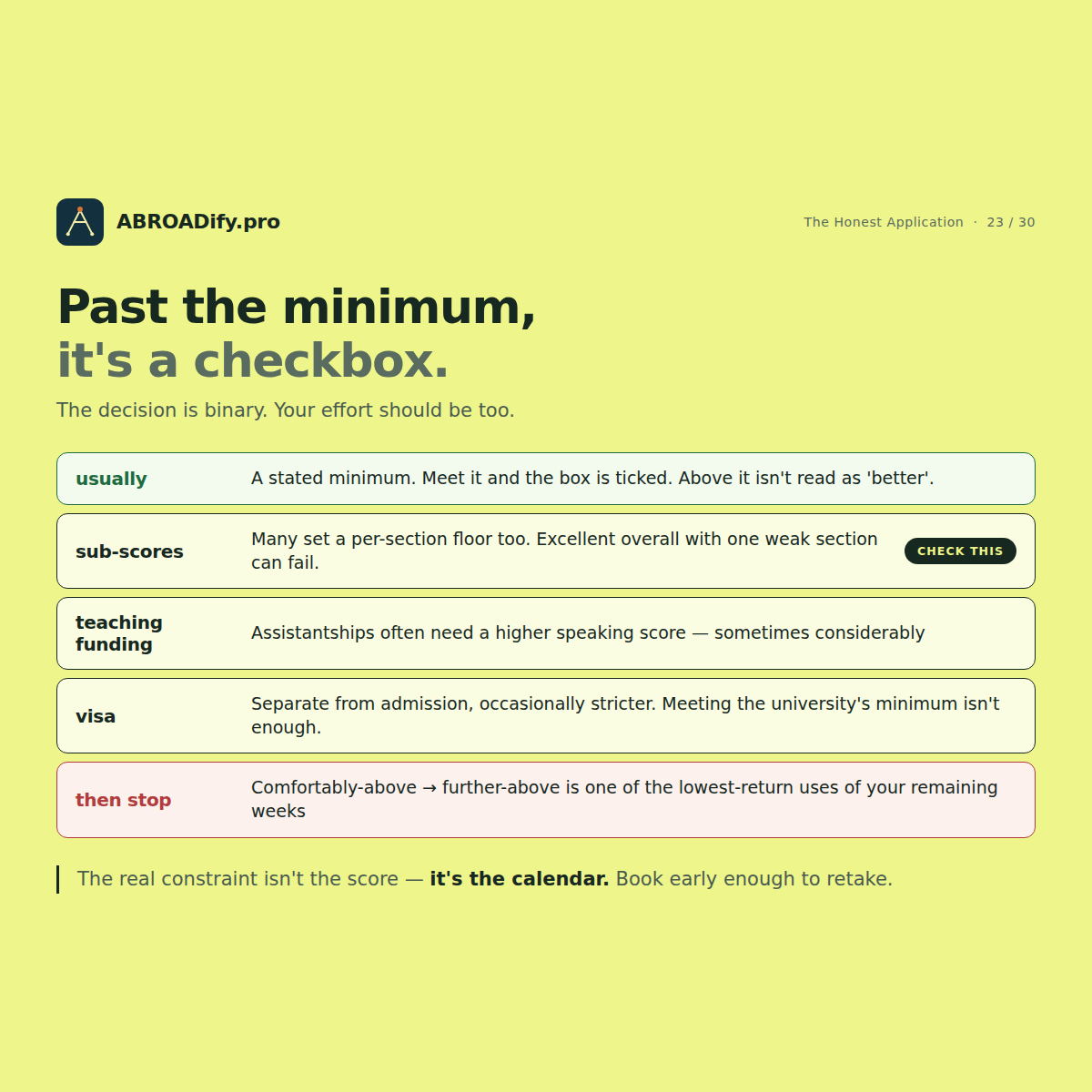
Your English test score isn't the bottleneck you think
A lot of energy goes into pushing an English score higher. For most applicants, past a point, it buys nothing.
Guide 24
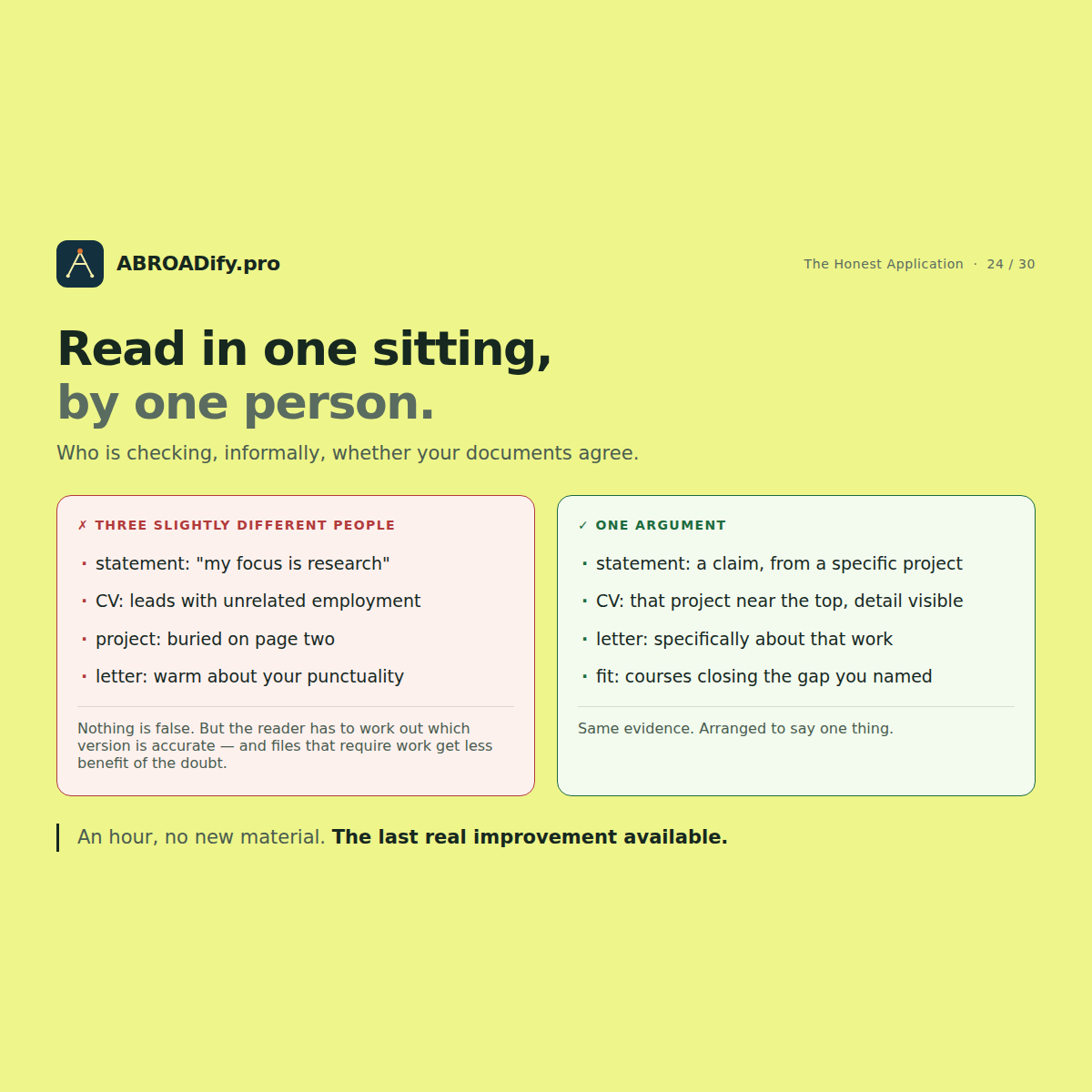
The file as one coherent argument
Every document in your application is read by the same person, in one sitting. They are checking, informally, whether the documents agree.
Act 5 · Money, and deciding
Guide 25
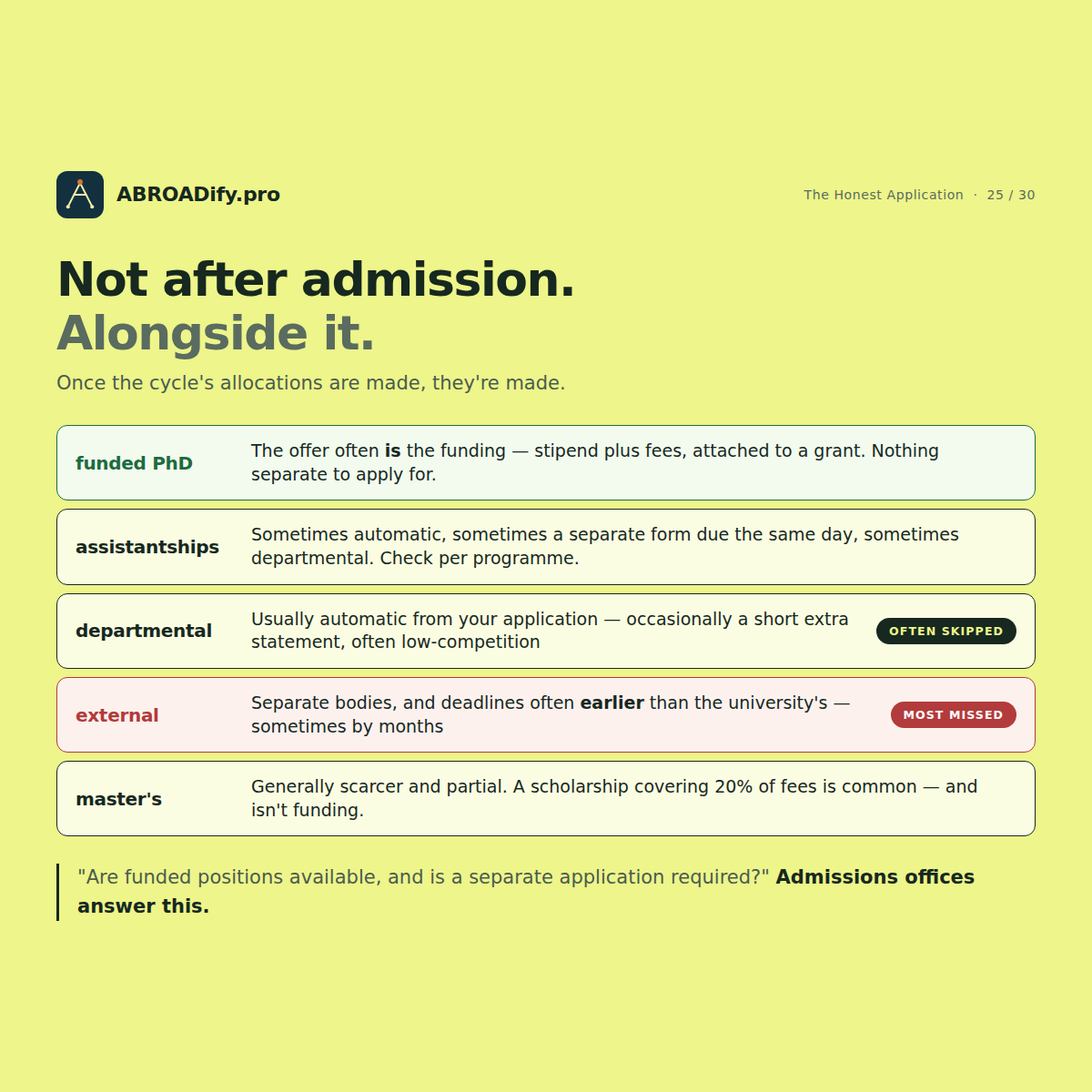
Funding is decided before you're admitted
A common and expensive assumption: get admitted first, then work out the money.
Guide 26
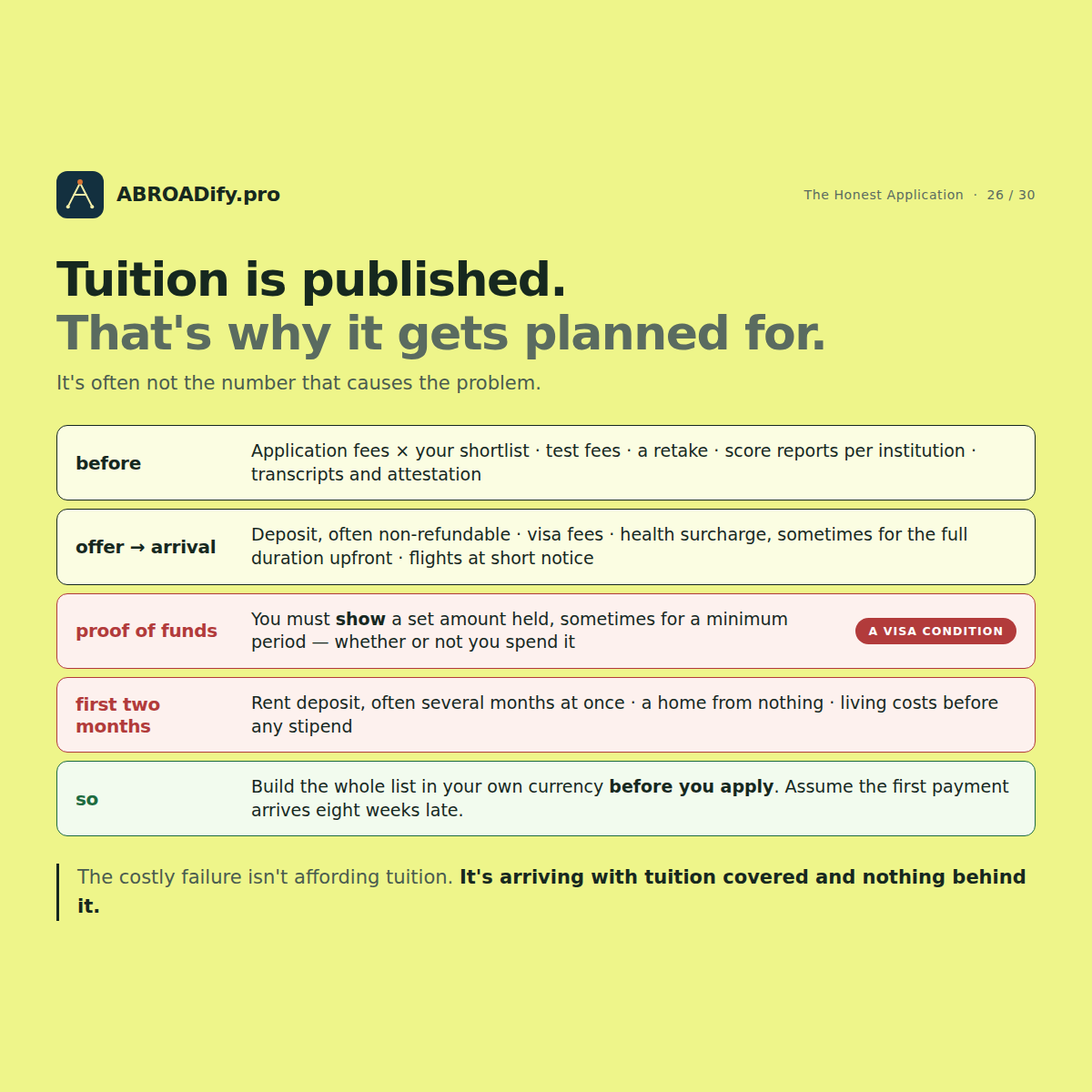
The cost nobody budgets for
People budget for tuition. Tuition is the number that's published, so it's the number that gets planned around.
Guide 27
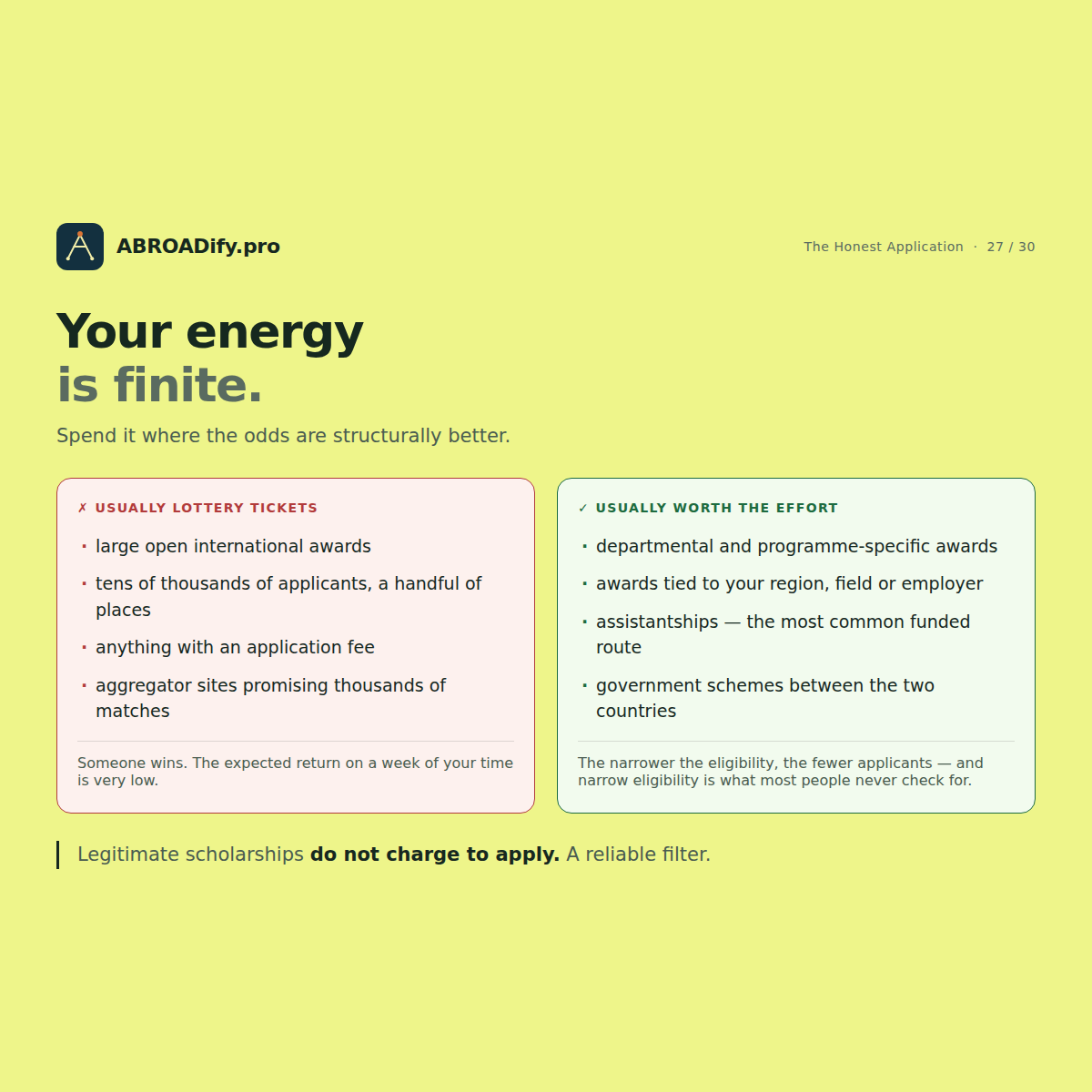
Scholarships worth the effort vs. lottery tickets
Scholarship hunting absorbs enormous amounts of time, and much of it goes to applications that were never realistic.
Guide 28
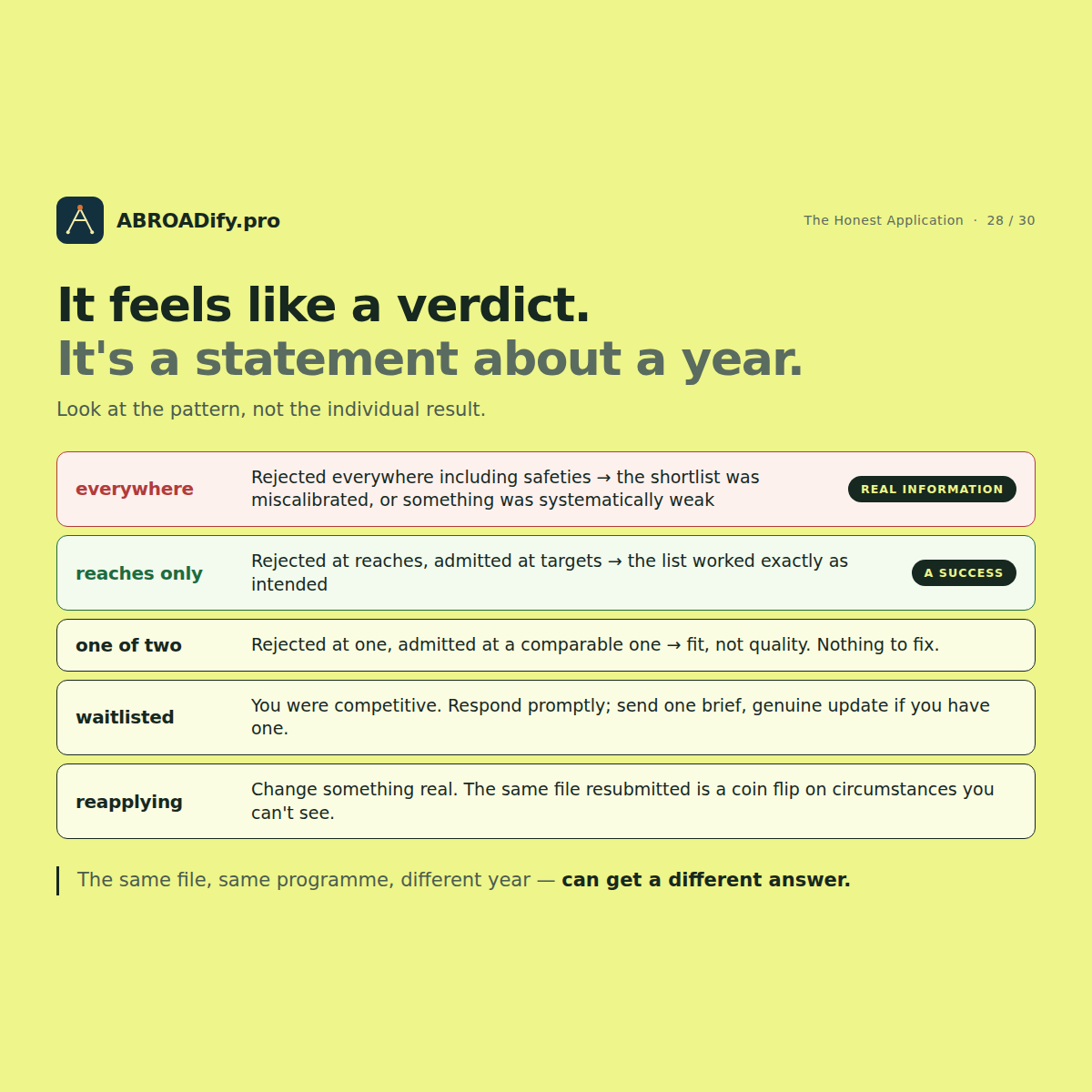
A rejection tells you almost nothing
A rejection feels like a verdict on you. It's usually a statement about a fit, a year, and a budget.
Guide 29
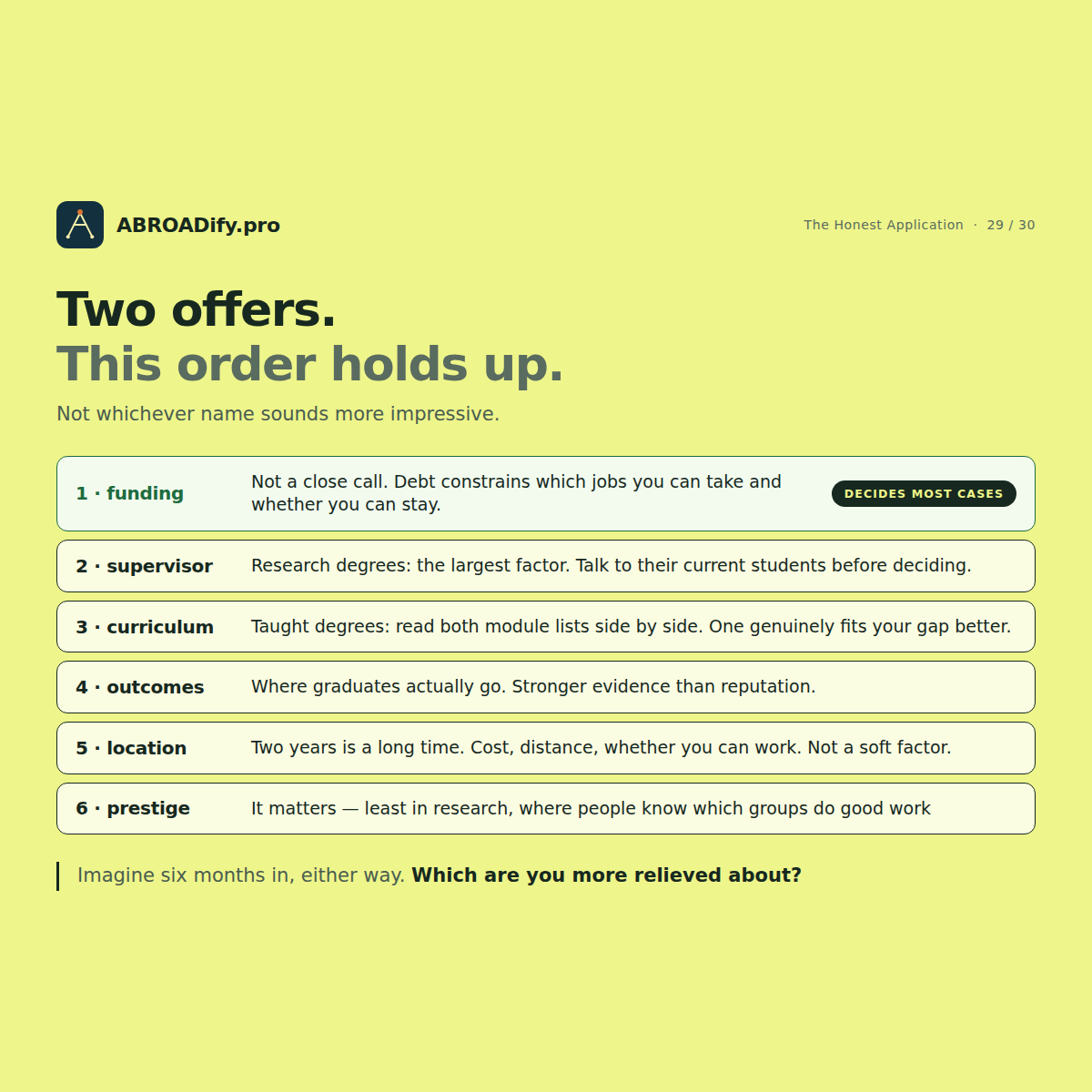
Choosing between two offers
A good problem, and people routinely decide it on the wrong criteria — usually whichever name sounds more impressive.
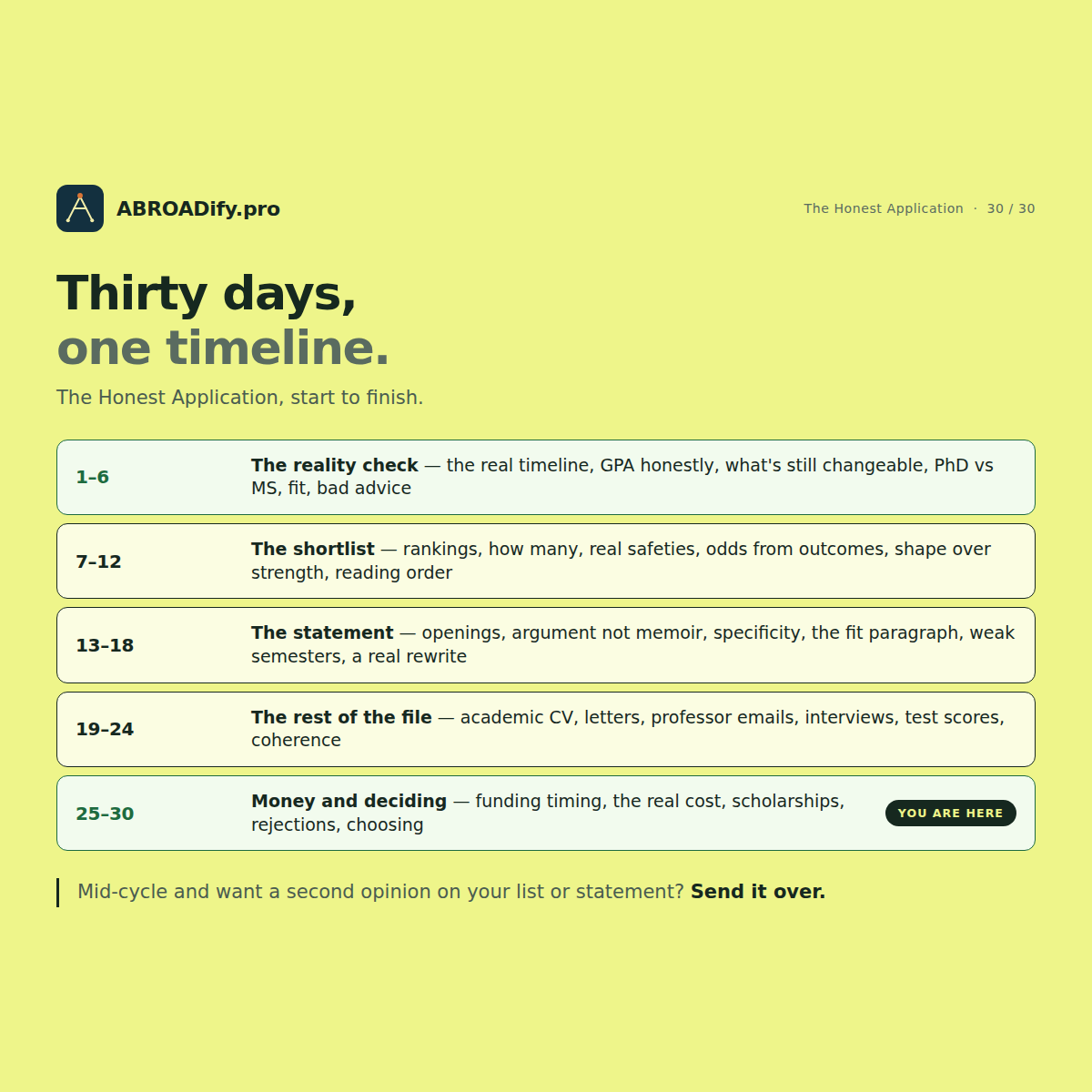
Guide 30
The whole application, as one timeline
Thirty days on the graduate application, in the order you'll face it. Here's all of it.
Want a second opinion on your application?
Send your profile for a free evaluation. You'll get an honest read on your odds and what to fix first. No obligation, and no flattering list.